Nakajima Original Simmered Sauce Katsudon
Nakajima presents itself as the originator of simmered sauce katsudon: the breaded pork cutlet is steeped in a savoury sauce before it covers the rice. Cabbage adds fres…
Businesses, schools, hospitals, professionals and other organizations with practical context.
Nakajima presents itself as the originator of simmered sauce katsudon: the breaded pork cutlet is steeped in a savoury sauce before it covers the rice. Cabbage adds fres…
The Shosenkyo Ropeway changes the scale of the valley. In about five minutes it climbs from Sengataki to Panorama-dai, where the view opens across woodland, the Kofu Bas…
North of Kofu, Shosenkyo follows the Arakawa River between granite walls, waterfalls and formations shaped by water over time. The scenery changes with the seasons, but…
Ponshukan sits inside Niigata Station’s shopping complex and offers a quick introduction to the breadth of sake without a visit to a single brewery. Its tasting room bri…
Founded in 1767, Imayo Tsukasa is one of Niigata’s historic breweries and describes itself as the brewery closest to the main station. The tour enters an operating facil…
Toyama Glass Studio turns a tradition nurtured by the city for decades into a hands-on visit: here you can watch makers at work and shape an object of your own, not only…
Toyama Glass Art Museum occupies TOYAMA KIRARI, a civic complex in the city centre that brings together art and the public library. Architect Kengo Kuma shaped a façade…
The Kiku-Masamune Sake Brewery Museum shows how sake production depends on the crafts around it. Its rooms present traditional tools, the kimoto method—a way of preparin…
Hakutsuru opened an old sake brewery to the public so visitors can learn how the drink was made before mechanisation inside a genuine former workplace. Displays cover st…
The boat departs from a riverside base on the Yoshino River, where the mountains close in around the Oboke gorge. It moves beneath steep rock walls and green water; the…
Kaba Shuzōjō is a family brewery in Hida Furukawa whose history dates to 1704. Its shop is in Ichinomachi, a five-minute walk from the station, in a district where tradi…
Watanabe Sake Brewery makes the Hourai label in Hida Furukawa, a Gifu town framed by mountains and known for lattice-fronted merchant houses and white-walled storehouses…
Kazurabashi appears in a mountain gorge in the Iya Valley on Shikoku, where the river runs beneath a walkway woven from vines. The current bridge is 45 metres long, two…
Menkyo Kaiden lets visitors compare another version of Yoshida udon without leaving Fujiyoshida. The local specialty keeps the region’s thick, resilient noodles, but the…
Miura Udon serves one of the best-known expressions of everyday Fujiyoshida cooking: Yoshida udon, a soup of deliberately firm noodles in a soy-and-miso broth. The city…
Iwatayama Monkey Park turns a short outing into a nature visit. From the entrance, across Togetsukyo Bridge, a mountain path climbs to a lookout where Japanese macaques…
Tenryu-ji stands at the heart of Arashiyama’s history. It was founded in 1339 by order of shogun Ashikaga Takauji to honour Emperor Go-Daigo, with Zen monk Muso Soseki a…
Tsukiji Shouro has an unusual origin story: it began as a sushi shop in 1924, and post-war fish shortages led the business to make rolled omelette its central product. S…

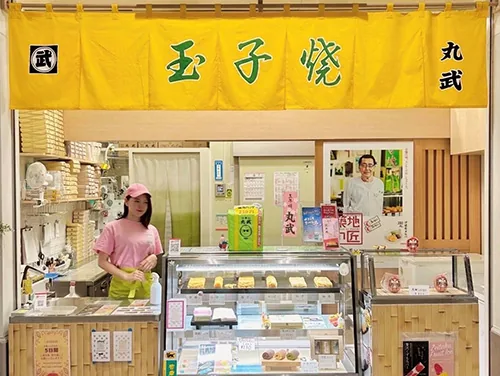
Marutake specialises in tamagoyaki, the rolled Japanese omelette served in Tsukiji as a snack, side dish and edible souvenir. Its stall at 4-10-10 sits in the Outer Mark…
Endo Mochiten began in 1948, when founder Chuichi Endo opened a mochi shop in central Sendai; in 1952 it moved to Miyamachi, where it remains a family business. The shop…
Zunda Saryo sits in the shopping passage inside Sendai Station, on the third floor and a short walk from the Shinkansen platforms. Its location lets you try a regional s…
The former Bank of Japan Otaru Branch opened in 1912 and now keeps its rooms as a free financial museum. The building was designed by Kingo Tatsuno and Uheiji Nagano, ar…
The Stained Glass Museum is part of Otaru Art Base and occupies two buildings linked to the port city’s commercial past: the Takahashi Warehouse and the former Arata fir…
At the eastern end of Odori Park, the TV Tower makes central Sapporo easy to read from above: follow the 1.5-kilometre green corridor, the avenues and, on clear days, th…