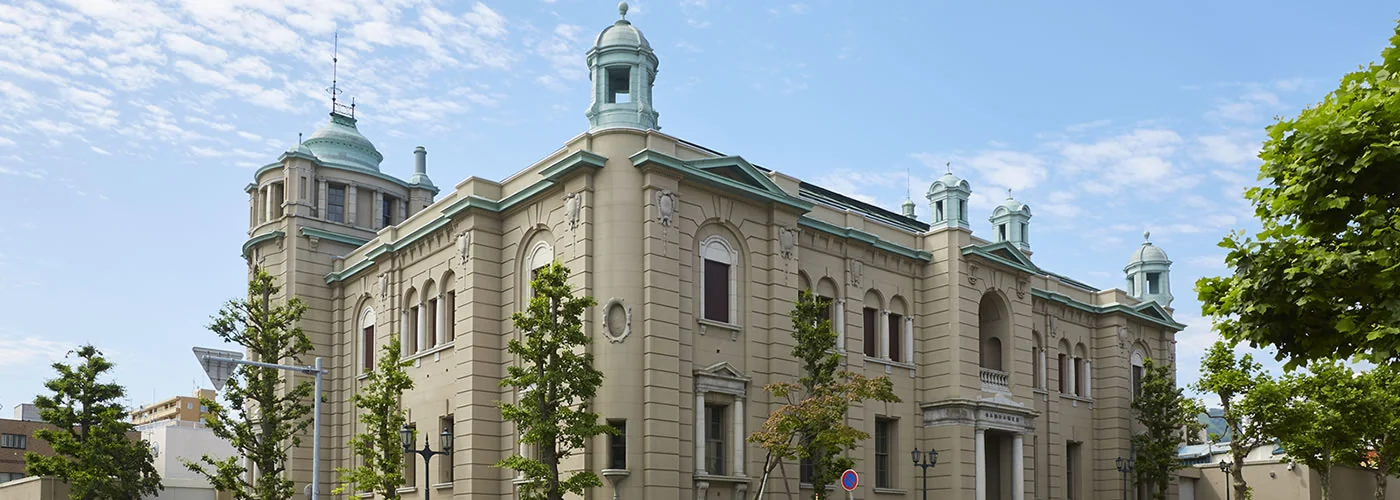
The Bank of Japan Otaru Museum
The former Bank of Japan Otaru Branch opened in 1912 and now keeps its rooms as a free financial museum. The building was designed by Kingo Tatsuno and Uheiji Nagano, architects associated with modern Western-style architecture in Japan; its domes, brickwork and customer spaces are part of the story
About The Bank of Japan Otaru Museum
The former Bank of Japan Otaru Branch opened in 1912 and now keeps its rooms as a free financial museum. The building was designed by Kingo Tatsuno and Uheiji Nagano, architects associated with modern Western-style architecture in Japan; its domes, brickwork and customer spaces are part of the story, not just a frame for the displays. Otaru was a commercial and financial centre in Hokkaido, and the exhibition links the bank’s history with the city’s growth and the everyday role of money.
The route includes documents, banknotes, explanations of banking operations and spaces from the former branch, including the vault and meeting rooms. The museum estimates a self-guided visit at 30 minutes to an hour; some exhibits have short English explanations and multilingual leaflets are available. Visitor comments often recommend it for free entry, architecture and displays that make financial systems tangible. Others find it small or want more English text, so it works best as a focused stop rather than a full afternoon museum.
Entry is free, but the hours shape your route: from April to November it opens 9:30 am–5 pm, and from December to March 10 am–5 pm; last entry is 4:30 pm. It closes on Wednesdays unless the day is a public holiday, and from December 29 to January 5. The address is 1-11-16 Ironai, about a ten-minute walk from the station according to the local visitor guide. Coin lockers use a refundable coin; eating is not permitted, and drinks are limited to a designated area.
Free admission makes a useful contrast with the ticketed Stained Glass Museum. Together they form a compact Ironai visit: first take time with the English glass collection, then explore the bank to understand the commercial prosperity that shaped Otaru. Both museums have Wednesday closures, so check their calendars before planning the day. The financial museum is especially appealing on a rainy day, to architecture enthusiasts or travellers who want local history without adding another ticket.
Banking, currency and Otaru’s development inside a building completed in 1912.
Photos