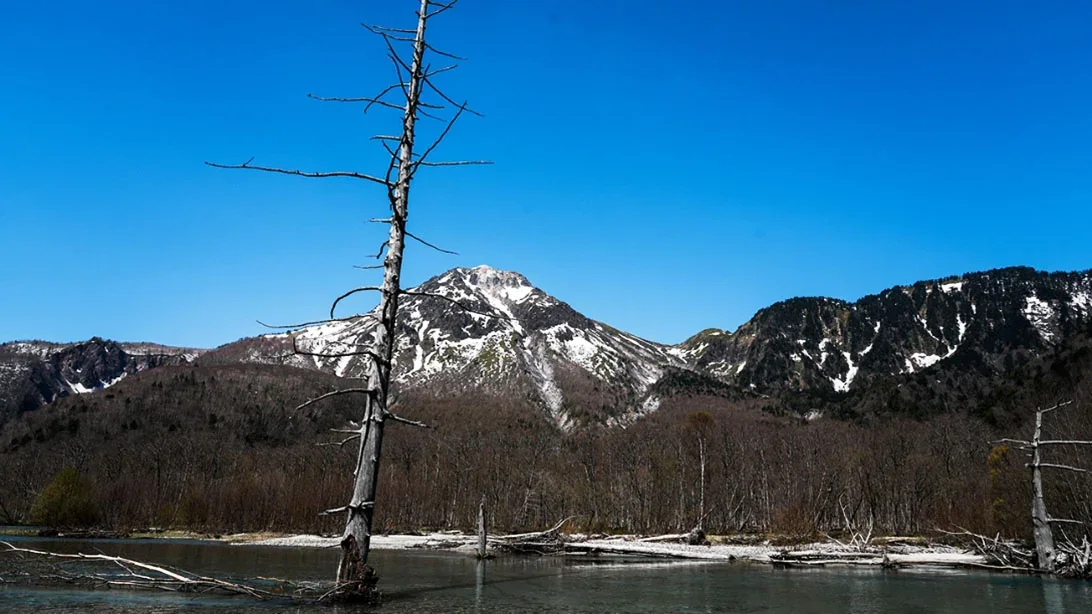
Taisho Pond
Taisho Pond is a landscape shaped by an event that can still be read in its details. In 1915, an eruption of nearby Mount Yakedake dammed the Azusa River and formed the pond; its name comes from the Taisho era. The water, marsh edges and pale trunks of submerged trees give this stop a different char
About Taisho Pond
Taisho Pond is a landscape shaped by an event that can still be read in its details. In 1915, an eruption of nearby Mount Yakedake dammed the Azusa River and formed the pond; its name comes from the Taisho era. The water, marsh edges and pale trunks of submerged trees give this stop a different character from a mountain summit: its appeal lies in reflections, weather and the valley’s changing light. On a still morning, the Hotaka peaks and Yakedake may appear on the water, while mist can soften their outlines.
The pond sits on the flat walking corridor between Taisho-ike bus stop and the Kamikochi resort area. The official route guide gives roughly 3.8 kilometres from Kappa Bridge by one riverside route, about 75 minutes on foot, and 4 kilometres/80 minutes on the other bank; those estimates exclude long photo stops. It can be a one-way walk towards the bridge rather than a return hike. Toilets are nearby, but the riverbank and marsh are protected habitat: stay on marked paths and do not pick plants or feed wildlife.
Visitor comments repeatedly mention the reflections, the standing dead trees and the quiet before day-trippers arrive. The view depends on weather: wind and clouds can hide the mirror effect, while autumn leaves, early snow and summer vegetation change the scene. Some reviewers find the pond less dramatic in poor conditions or note how much its surface has shrunk over time. That is useful context, not a flaw in the walk—the pond was formed by volcanic debris, receives sediment from the mountainside and is maintained, so it is a living landscape rather than a fixed postcard.
Access is seasonal: Alpico lists buses from Matsumoto to Kamikochi from 17 April to 15 November 2026, with no service from 16 November to 16 April. Direct National Park Liner buses leave Matsumoto Bus Terminal at 5:30 and 10:15 and require advance reservations; the alternative is a train to Shin-Shimashima followed by a bus. Reserve your return journey too, check the last departure and carry layers even in summer.
Alpine pond formed by the 1915 eruption
Photos