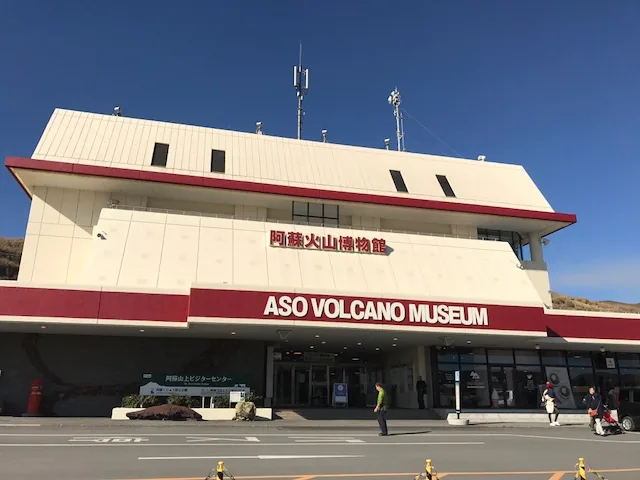
Aso Volcano Museum
Aso Volcano Museum is an entry point to understanding a landscape that, from the viewpoint, can look like a sequence of grasslands and mountains. Its exhibits explain the caldera’s formation, geological change and Mount Nakadake’s activity through images, models and audiovisual material. It does not
About Aso Volcano Museum
Aso Volcano Museum is an entry point to understanding a landscape that, from the viewpoint, can look like a sequence of grasslands and mountains. Its exhibits explain the caldera’s formation, geological change and Mount Nakadake’s activity through images, models and audiovisual material. It does not replace seeing the terrain outdoors, but it helps visitors identify peaks and understand why areas may close even on a clear day.
The official site lists daily opening from 9:00 to 17:00, with last admission at 16:30; weather and other notices may change conditions. The Aso Visitor Center is on the same building’s first floor, so it is not a separate profile or admission stop. It provides information about routes and Kusasenri’s landscape. A tourist bus connects the area with Aso Station, but check the current route and whether a reservation is required: the timetable posted from July 2026 includes stops by the museum, although services can change.
Among the museum’s distinctive resources are real-time crater cameras and films or presentations about the caldera. Some visitors value being able to understand the terrain before walking; others find parts of the display somewhat traditional or limited in language options. The museum works best as context and preparation rather than a substitute for the grassland. If the camera shows poor visibility or an active alert, it can help reset expectations before going outside.
Combining the museum with Kusasenri is practical: both sit on the volcanic plateau beside the scenic road and bus stops. First check the crater notice, transport, weather and road conditions. Restrictions change with volcanic activity, gas, wind and safety assessments, and the crater may be closed while nearby areas remain accessible. Do not cross barriers or assume that other visitors’ presence means a restricted area is open.
A museum about the Aso caldera, with audiovisual exhibits, crater cameras and a visitor centre on the first floor.
Photos