Kapiʻolani Community College — Main Campus
Kapiʻolani Community College occupies a 44-acre campus on Diamond Head Road, on the slopes of Lēʻahi and about a mile from Waikīkī. Its setting is scenic but the practical reason to choose the campus is its concentration of programs: culinary arts and hospitality, healthcare, liberal arts, education
About Kapiʻolani Community College — Main Campus
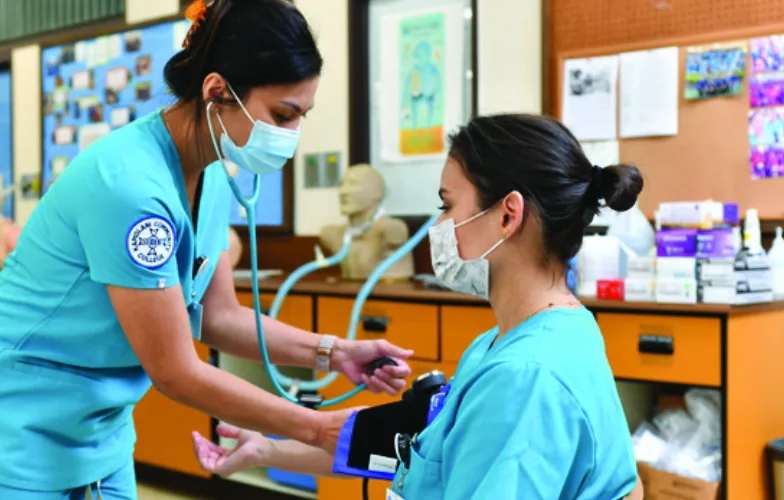
Kapiʻolani Community College occupies a 44-acre campus on Diamond Head Road, on the slopes of Lēʻahi and about a mile from Waikīkī. Its setting is scenic but the practical reason to choose the campus is its concentration of programs: culinary arts and hospitality, healthcare, liberal arts, education, business, computer science, natural sciences and engineering. The college’s program finder lists credentials and required credits rather than treating every student as a two-year associate-degree candidate. The 60-credit Liberal Arts AA is a common transfer path; technical health and culinary programs can require more credits and specific sequencing.
New students apply through the UH system and follow Kapiʻolani’s first-time student steps, which include records, placement, advising and registration. Program entry can differ: general admission does not itself secure a seat in a selective health field or waive prerequisites. The official program list is especially useful for seeing credential types and credit ranges. Start an application, then use the college’s admissions pages and speak with an adviser about the intended major.
For 2026–27, the posted tuition rate is $131 per credit for residents and $345 for nonresidents in lower-division courses. A 12-credit term therefore begins at $1,572 or $4,140 before campus charges. Kapiʻolani lists a student-activity fee of $2 per credit up to $20, student congress at 50 cents per credit up to $5, a $10 publications fee and a $40 U-Pass transportation charge for in-person or hybrid study. Upper-division 300-level credits have different rates. FAFSA, institutional scholarships and state aid can change the net amount, but awards depend on eligibility and filing deadlines. Review the complete fee table and financial-aid process.
Kapiʻolani is a notable option for students building English before or alongside college study. Its credit-bearing ESOL sequence has beginning, intermediate and advanced courses; students may also take one or two other college classes in the same semester. The separate Intensive English Program is designed for international learners and meets about 18 hours per week; students in that pathway focus on English courses before transitioning to the credit ESOL sequence. Placement and visa status affect which route fits. Compare ESOL pathways and contact the coordinator before submitting a program plan.
The campus map and virtual tour identify the student center, culinary facilities, cafeteria, bookstore, support services, gardens and specialized learning spaces. Reaching campus requires planning: TheBus routes serve the area, while Kapiʻolani says student parking is limited and permits are required; overflow parking is not guaranteed. The U-Pass fee applies to many in-person or hybrid students. Check current bus routes, parking and arrival instructions before a campus visit, especially if the goal is a specific building or advising appointment.
A 44-acre campus near Diamond Head with culinary, healthcare, hospitality, liberal-arts and STEM pathways, plus credit-bearing ESOL.
Photos