Denshoen Folk Village
Denshoen brings together several layers of Tono’s rural memory in a compact site. Its centrepiece is the Kikuchi family residence, a magariya farmhouse recognised as an Important Cultural Property of Japan. Nearby, the Kizen Sasaki memorial recalls the storyteller and collector whose work helped mak
About Denshoen Folk Village
Denshoen brings together several layers of Tono’s rural memory in a compact site. Its centrepiece is the Kikuchi family residence, a magariya farmhouse recognised as an Important Cultural Property of Japan. Nearby, the Kizen Sasaki memorial recalls the storyteller and collector whose work helped make the city’s local tales widely known. A visit moves from the layout of a traditional home to the stories and beliefs associated with it.
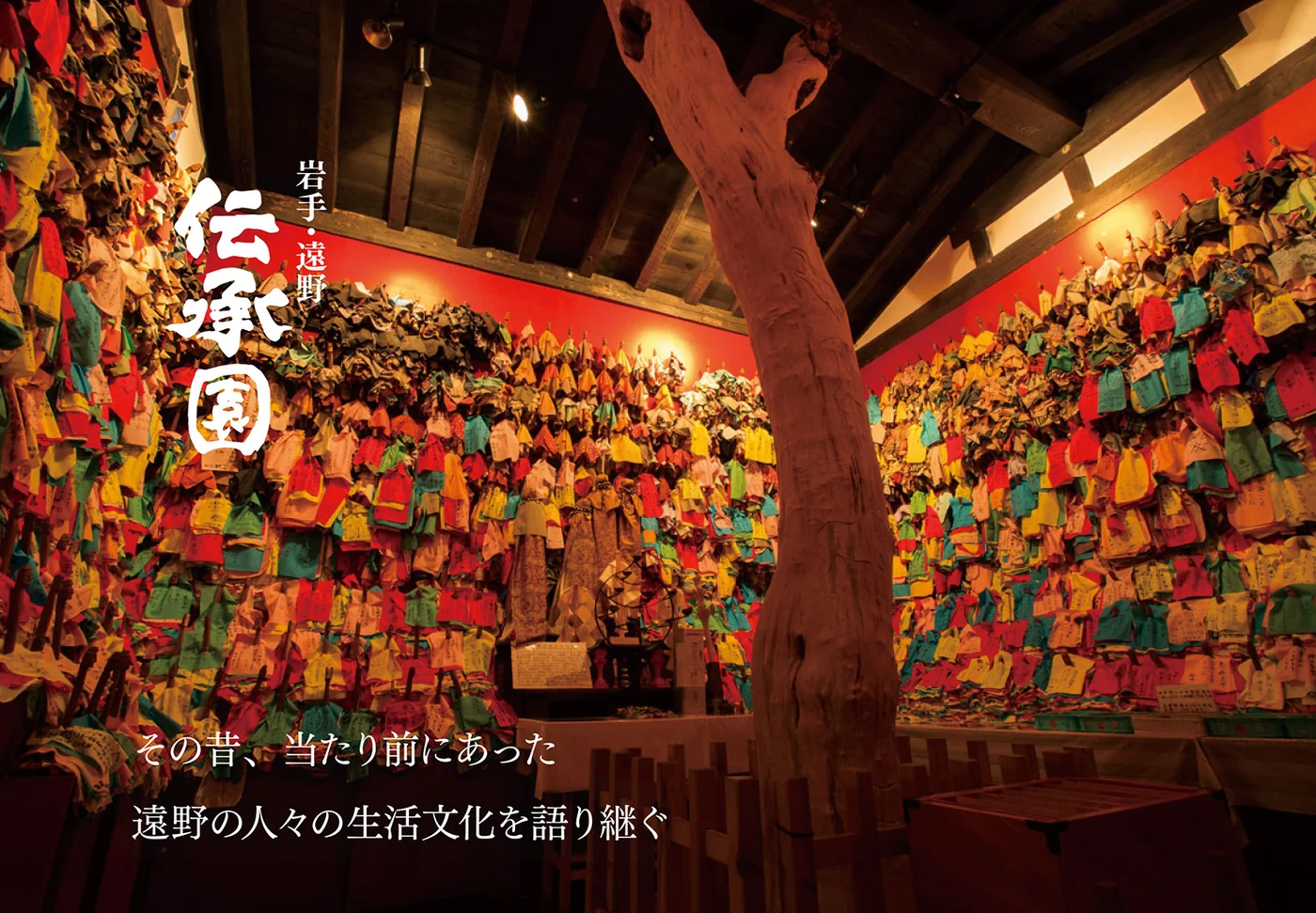
The Oshira-do, a small ritual hall covered with figures dressed in strips of cloth, is often the most striking room—and the one that divides opinion. Some visitors describe it as moving and unusual; others find it dark or expect a larger museum. Oshirasama should not be presented as a mere curiosity: the figure is connected with household practice and popular belief. The farmhouse, everyday-life displays and local storytelling provide context without turning tradition into a spectacle.
Admission is ¥450 for adults and ¥350 for elementary, junior-high and high-school students; preschool children enter free. General hours are 9:00 am–5:00 pm, although the site lists shorter winter hours and Tuesday closures in January and February. Oshira-tei, the on-site dining room, serves local dishes such as hittsumi and grilled mochi; opening may vary by season or event. Buses from JR Tono take about 17–25 minutes depending on the route and stop beside the site; cycling takes around half an hour.
Denshoen works well as an introduction to Tono: visitors can walk a few minutes to Kappa-buchi, the stream associated with a kappa legend, then continue to the reconstructed rural village if transport and time allow. Reviews often value the farmhouse and the wealth of detail; some visitors recommend allowing more than an hour and using a translation tool to follow the explanations. It is the more compact choice for travellers who want architecture, folklore and a simple local meal without touring the wider region.
A protected magariya farmhouse, a memorial to storyteller Kizen Sasaki and the Oshira-do shrine hall.
Photos