Awa Odori Kaikan
Awa Odori Kaikan makes Tokushima’s best-known dance a year-round encounter rather than a festival-only spectacle. The city describes Awa Odori as a tradition with roughly four centuries of history, and the building offers a practical introduction before visitors try its steps: the museum displays co
About Awa Odori Kaikan
Awa Odori Kaikan makes Tokushima’s best-known dance a year-round encounter rather than a festival-only spectacle. The city describes Awa Odori as a tradition with roughly four centuries of history, and the building offers a practical introduction before visitors try its steps: the museum displays costumes, instruments and objects that trace the dance’s development, while the dedicated hall presents live performances. It is especially useful for travellers visiting outside the August festival or seeking context before seeing dancers in the streets.
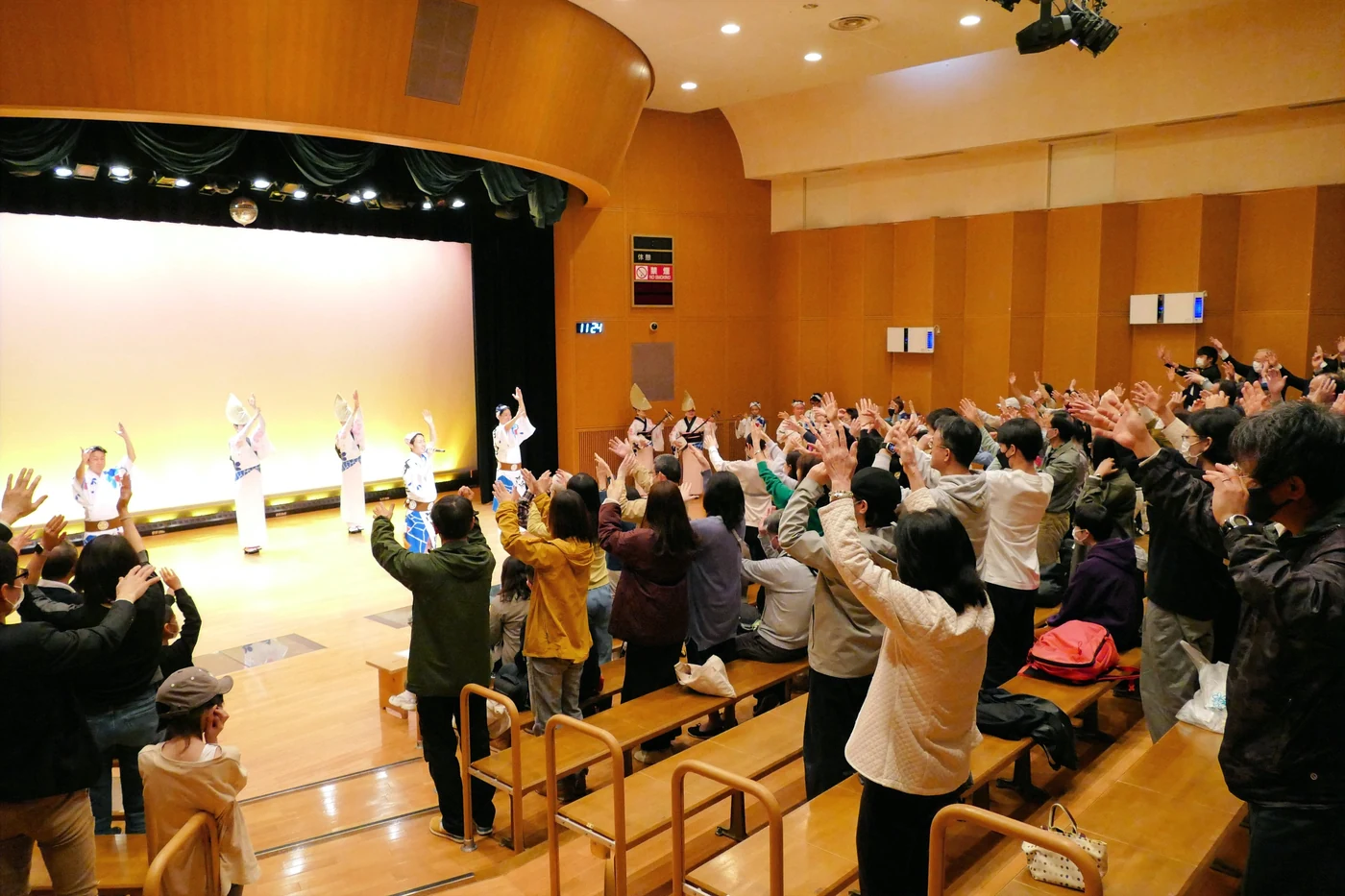
The floors make it easy to combine culture with a short walk around the city. The museum is on the third floor and opens from 9 am to 5 pm, with last entry at 4:45 pm. On the second floor, the hall stages four 40-minute daytime shows at 11 am, 2 pm, 3 pm and 4 pm, plus a 50-minute performance at 8 pm. Day shows feature the resident Awa no Kaze troupe; evening performers rotate among well-known groups. A participation segment teaches the audience a few steps, and the first-floor shop sells Tokushima products and souvenirs.
Public visitor comments often single out the music, coordinated costumes and close view of the dancers; people who join the participation segment say the steps are approachable even without prior experience. Others note that a combined visit can cost more than a quick museum stop, particularly if they add a show and the ropeway. Reviews also praise the explanations and the chance to take part, while some visitors prefer to remain seated. You can choose how much to do rather than treating the visit as one fixed package.
The address is 2-20 Shinmachibashi, about a ten-minute walk from JR Tokushima Station. The museum and each performance have separate admission fees, and combination tickets are available at the venue; check the current schedule before setting out because performances or ropeway services may change with weather or other conditions. The hall closes on the second Wednesday in four months, as well as over the year-end period. For a short visit, a daytime show followed by the museum gives a clear introduction; an evening performance adds the atmosphere of a rotating professional troupe.
Year-round Awa Odori performances and a museum devoted to Tokushima’s signature dance.
Photos