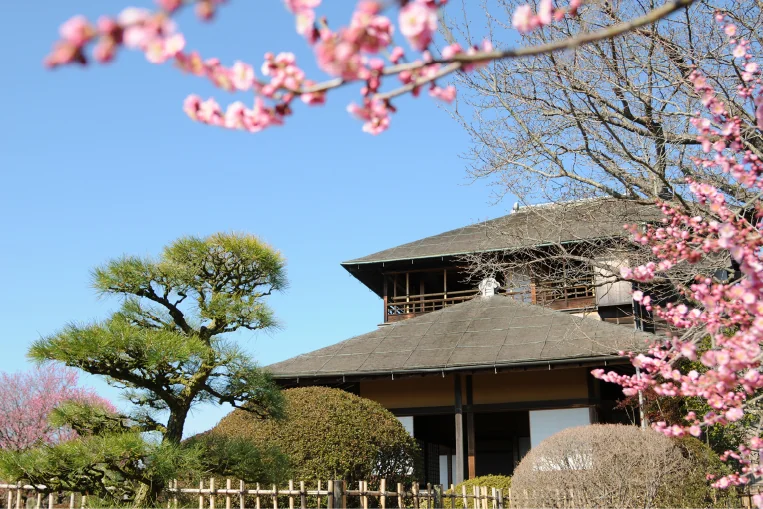
Kairakuen Garden
Kairakuen was not created as a garden detached from public life. Tokugawa Nariaki, the ninth lord of the Mito domain, founded it in 1842 and wanted both himself and local residents to enjoy it. That purpose explains its historic pairing with Kodokan, a school for scholarship and martial arts: discip
About Kairakuen Garden
Kairakuen was not created as a garden detached from public life. Tokugawa Nariaki, the ninth lord of the Mito domain, founded it in 1842 and wanted both himself and local residents to enjoy it. That purpose explains its historic pairing with Kodokan, a school for scholarship and martial arts: discipline alongside leisure, study alongside a walk. Today it is one of Japan’s Three Great Gardens, and its character changes as paths move between open spaces, woodland and views over Lake Senba.
The most story-rich entrance is Omotemon, the front gate. From there, paths pass through a cedar grove and the unexpectedly dense Moso bamboo forest before opening onto the plum garden. Kairakuen has about 3,000 ume trees across roughly 100 varieties. Blossoms draw visitors in late winter, but the terrain and plantings give reason to walk outside that peak as well. Togyokusen spring and the views from the higher ground help explain why Nariaki conceived the garden as a place for shared recreation.
Visitor feedback consulted highlights the spacious grounds, the contrast between plum trees and bamboo, and quieter sections away from the busiest entrances. It also stresses how much the experience depends on the season: outside bloom, the scenery is greener and more restrained; during the festival, crowds and access arrangements can change. Kairakuen is not measured by a single photo; allowing time to cross it and pause at less obvious spots makes the visit more rewarding.
City buses run from Mito Station, but several stops and gates serve the grounds, so choose the entrance to suit your route and check that day’s service. Main-garden admission is ¥320 for adults in the regular period, and hours change by season; special conditions apply during the Plum Blossom Festival. The wider park outside the paid main garden is free, while the Kōbun-tei villa has its own ticket and schedule. Leave time for it rather than arriving just before closing.
Jardín paisajístico fundado en 1842, conocido por sus variedades de ciruelos, el bosque de bambú y su vínculo con el antiguo dominio de Mito.
Photos