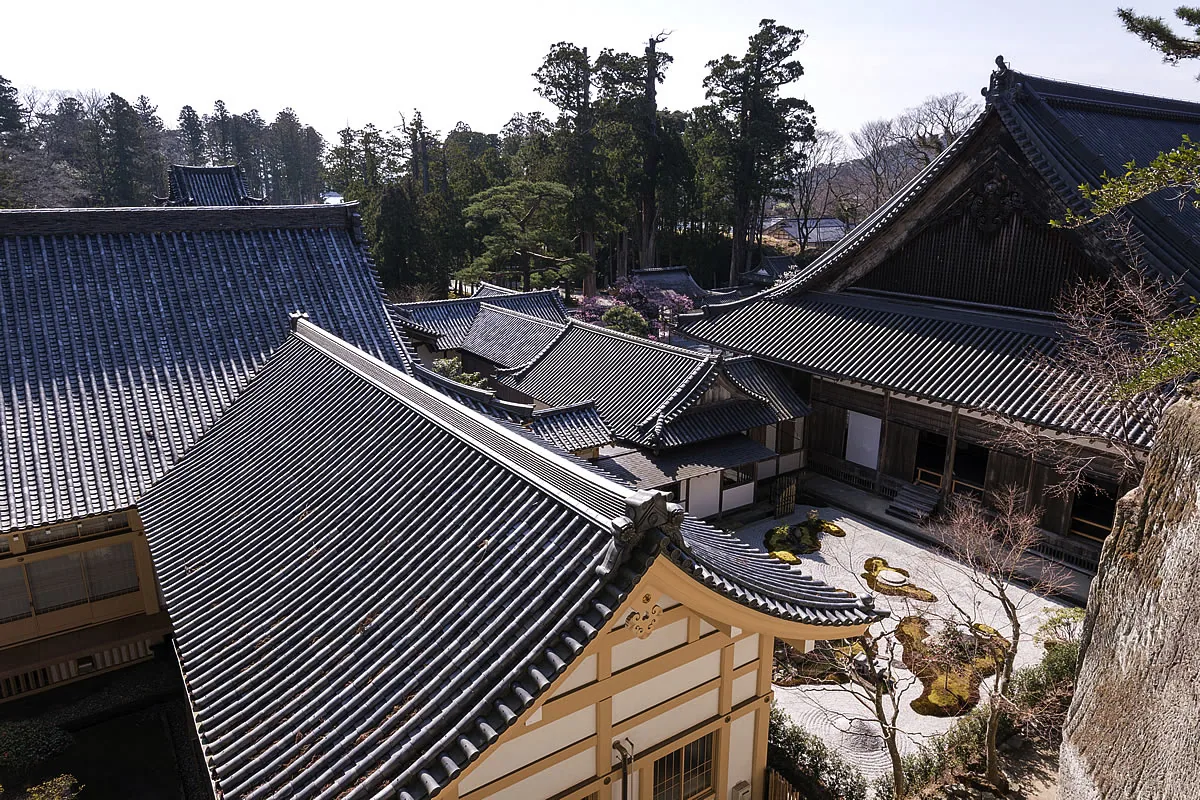
Zuiganji Temple
The walk from the pier to Zuiganji gradually leaves the bay’s bustle behind: first cedar trees and gates, then courtyards and architecture tied to the power of the Date clan. The Zen temple was rebuilt by Date Masamune and completed in 1609. Its main hall and kuri, or monastery kitchen, are designat
About Zuiganji Temple
The walk from the pier to Zuiganji gradually leaves the bay’s bustle behind: first cedar trees and gates, then courtyards and architecture tied to the power of the Date clan. The Zen temple was rebuilt by Date Masamune and completed in 1609. Its main hall and kuri, or monastery kitchen, are designated National Treasures; painted sliding doors preserve a striking visual language associated with the Momoyama period.
The visit combines historic buildings with an exhibition of objects connected to the temple and the Date family. Visitors often praise the carpentry, painted doors and contrast between ornate interiors and the quiet grounds. On weekends or when tour groups arrive, some rooms can become crowded; photography is prohibited in several indoor spaces. Allow time to read the displays rather than treating each room as a hurried photo stop.
Zuiganji is at 91 Matsushima-chōnai, about a ten-minute walk from Matsushima-Kaigan Station and around 25 minutes from JR Matsushima Station. In October it opens at 8:30, last reception is 16:00 and the gate closes at 16:30; admission is listed as ¥1,000 for adults and ¥500 for children. Seasonal times vary. For a day trip from Sendai, taking the cruise before the temple creates a straightforward route, but leave a buffer before last entry and check the return train.
Zen temple rebuilt under Date Masamune and designated a National Treasure of Japan
Photos