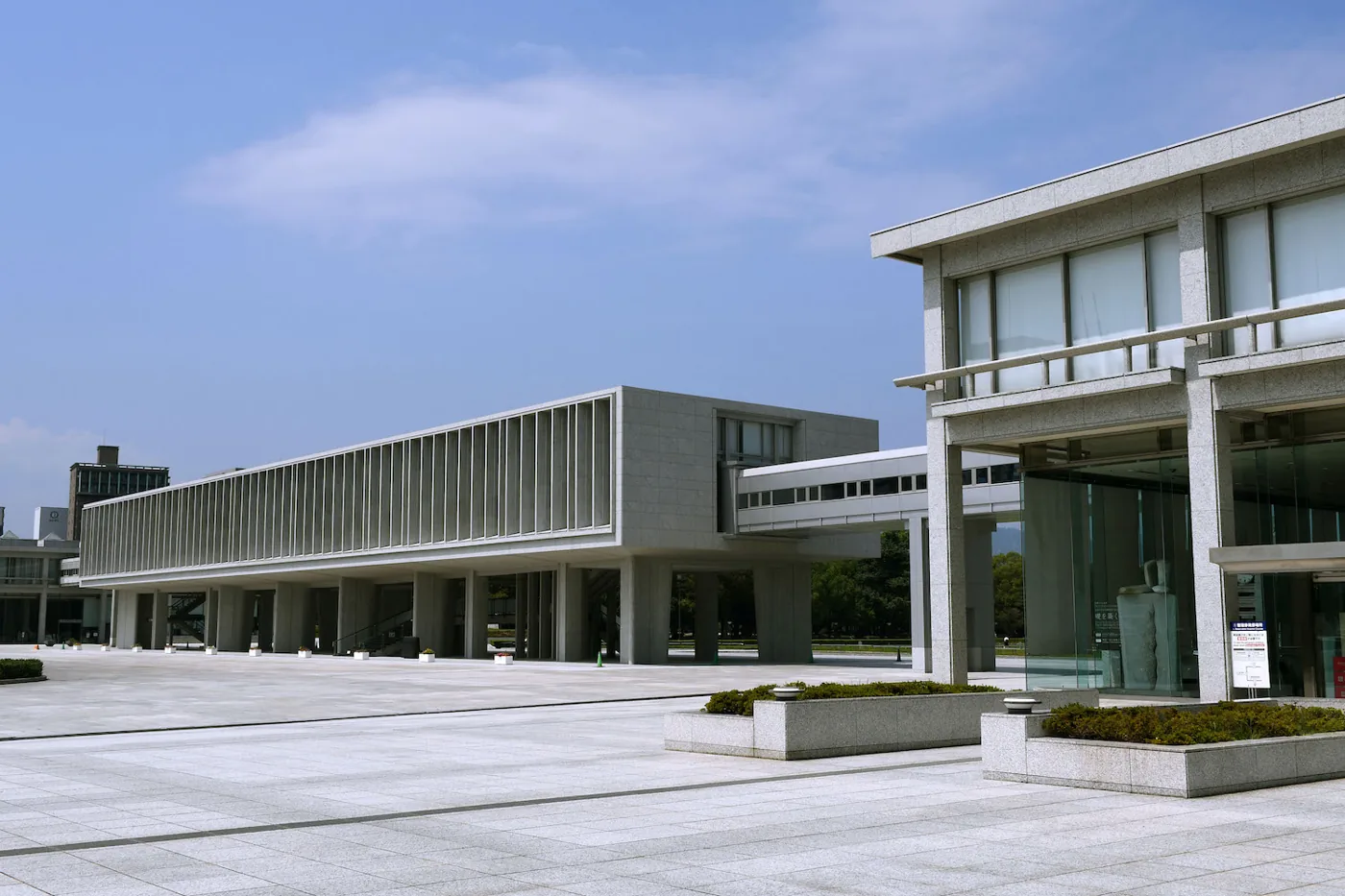
Hiroshima Peace Memorial Museum
Hiroshima Peace Memorial Museum brings together documents, photographs, personal belongings and testimony to explain the atomic bombing of August 6, 1945, and its consequences. The visit is not limited to a military timeline: objects left by victims and survivors’ accounts bring the history close to
About Hiroshima Peace Memorial Museum
Hiroshima Peace Memorial Museum brings together documents, photographs, personal belongings and testimony to explain the atomic bombing of August 6, 1945, and its consequences. The visit is not limited to a military timeline: objects left by victims and survivors’ accounts bring the history close to the everyday lives that existed before the blast and to the experiences of people who lived through it. The museum opened in 1955, and its exhibitions have been renewed in recent years.
From Hiroshima Station, many visitors find the simplest route is tram lines 2 or 6 to Genbaku Dome-mae, followed by a walk through Peace Memorial Park. The museum stands at the southern end of the park, while the Atomic Bomb Dome is to the north; walking between them helps visitors understand the scale of the memorial landscape. The Hiroshima National Peace Memorial Hall for the Atomic Bomb Victims is a separate, quieter facility focused on names and personal memories, so allow time for both if you plan to enter.
Visitor feedback often emphasizes the emotional force of the testimony and preserved belongings; people also describe crowded galleries and an experience that can be difficult, especially for children or anyone sensitive to graphic material. There is no need to rush. Reading the signs, taking breaks and alternating the exhibition with the open park can make the visit easier to absorb. Admission to the museum and to the memorial hall is handled separately.
Entry times and conditions can vary with the season and visitor numbers, so check the official channel before setting out and avoid building the rest of the day around an overly tight schedule. The area is easy to reach by tram or on foot from central Hiroshima, and the museum can be linked with the Dome, Cenotaph, Flame of Peace and Memorial Hall. This is a place of remembrance and learning: a respectful tone matters, and survivor testimony should not be treated as a photo opportunity.
Museum documenting the 1945 atomic bombing through personal belongings, photographs, testimony and peace-education materials.
Photos