Itsukushima Shrine
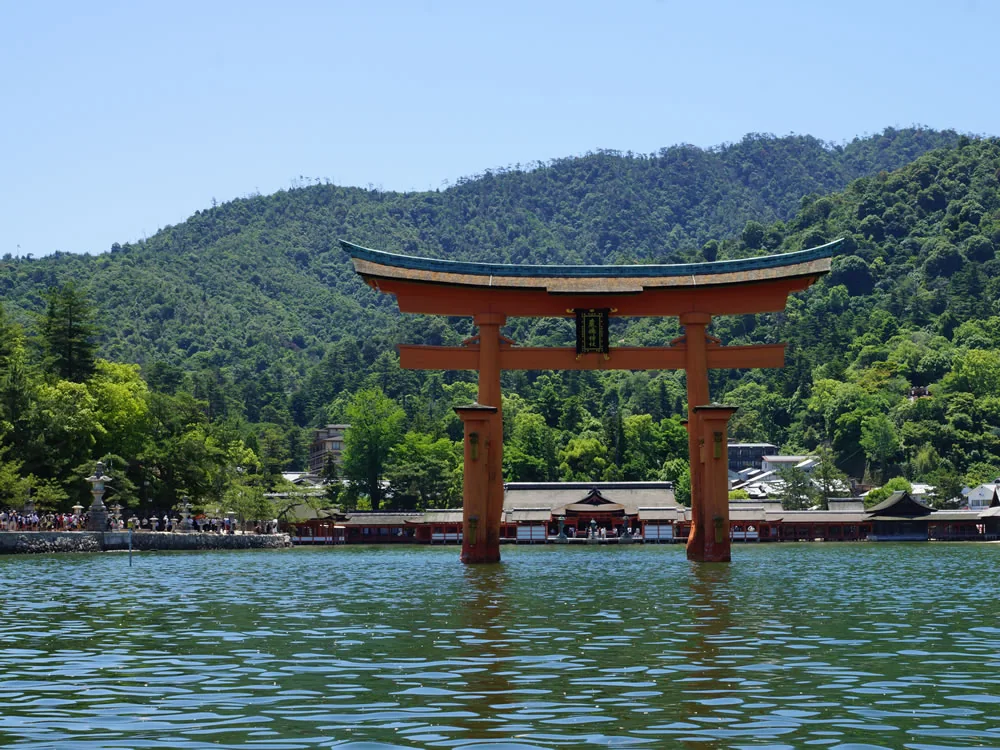
The shrine occupies the edge of the bay, making the landscape part of the visit: its vermilion corridors, halls and great torii change with the tide. UNESCO’s 1996 inscription recognises the cultural complex and its relationship with the island setting, not just the gate seen from the ferry.
About Itsukushima Shrine
The shrine occupies the edge of the bay, making the landscape part of the visit: its vermilion corridors, halls and great torii change with the tide. UNESCO’s 1996 inscription recognises the cultural complex and its relationship with the island setting, not just the gate seen from the ferry.
From Hiroshima Station, the JR train to Miyajimaguchi takes about 30 minutes; walk to the pier and cross by ferry in roughly ten minutes. From the island pier, the shrine is still a walk away. Two operators serve the route. JR runs some sailings close to the torii, but not every ferry follows that special route.
Visitors often value the waterfront architecture and the chance to walk through the corridors, while public comments also mention midday crowds. The tide changes the experience: at high water the shrine seems to float; at low water the shore is exposed and the torii can be approached. Check the tide table and seasonal shrine hours before choosing the day’s order.
A waterfront shrine inscribed on the World Heritage List in 1996, known for its halls over the water and the great torii in the bay.
Photos