Wasp Control Services
Wasp Control Services provides wasp nest removal and treatment for homes and businesses across the West Midlands, with a fixed £70 fee that includes call-out and guarantee.
About Wasp Control Services
Wasp nest removal across the West Midlands
Wasp Control Services is a pest control operator focused on the eradication of wasp nests in residential and commercial properties in the West Midlands. The company states that its technicians hold the RSPH Level 2 Award in Pest Management and that the team brings more than ten years of experience in the pest control industry.
The service is built around a single, clearly priced treatment: a fixed fee of £70 that covers the call-out and includes a guarantee. The company does not treat honey bees; if the insects are identified as honey bees, only a £20 call-out fee applies and no treatment is carried out. In those cases, the company says it works with local beekeepers who may be able to help with removal and provides advice on the best course of action.
Treatment methods depending on nest location
The approach varies with where the nest sits. For nests high off the ground, such as in roof spaces or wall cavities, a lance can be used to reach the entry point and inject insecticide. Over the following 24 hours, wasps enter the nest and carry the insecticide inside. When the nest is in an accessible place such as a garden shed, it can be removed with very little insecticide. The company states that suitable protective gear is used at all times.
Where wasps build nests
The company describes four common locations and how it handles them:
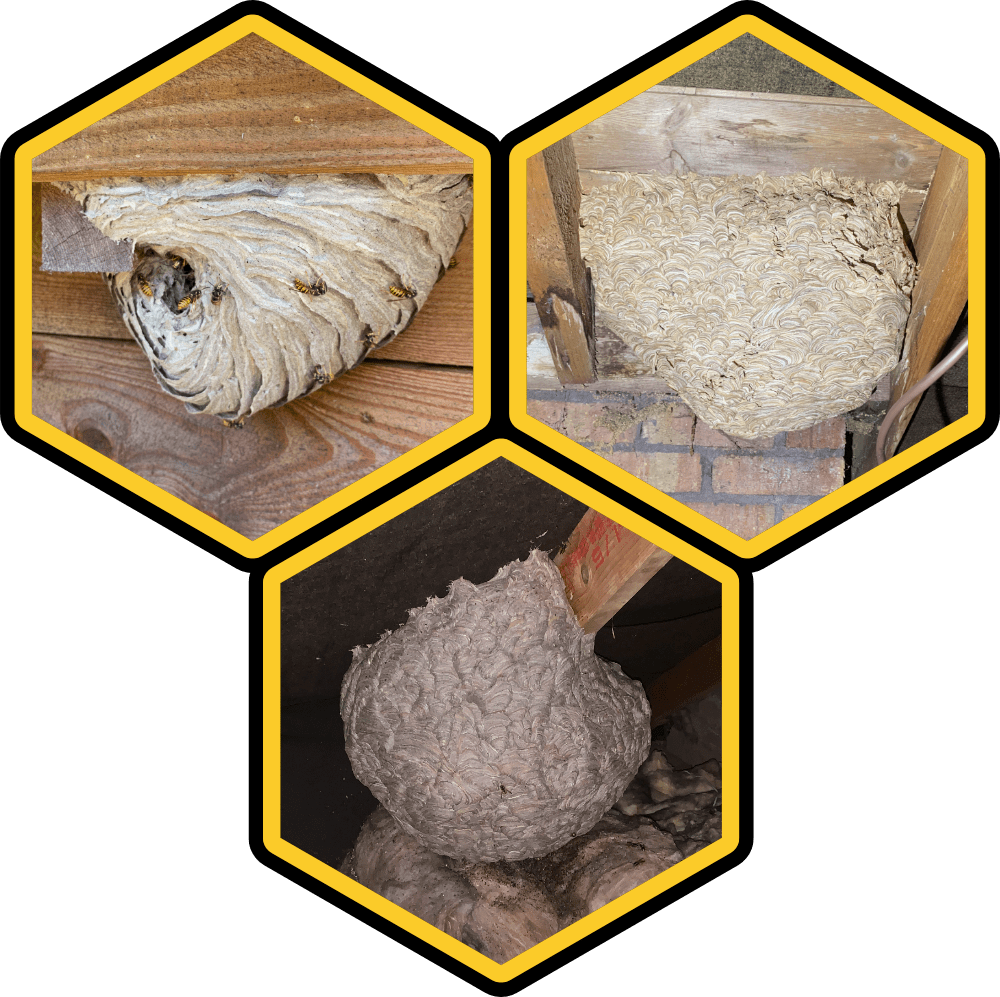
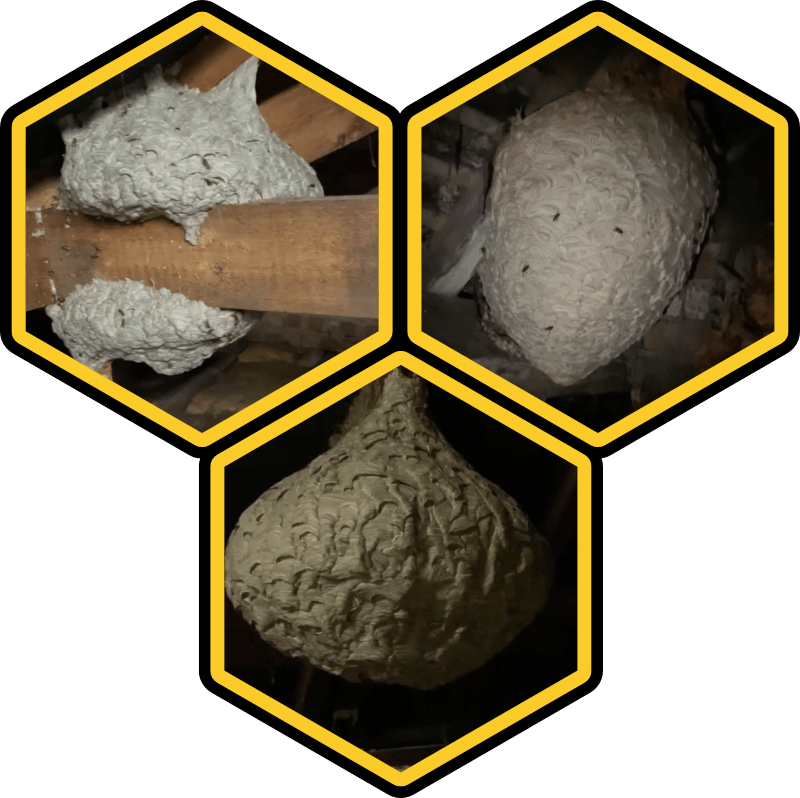
- Roof spaces: the most frequent site. Wasps may enter through crevices near roof fascias or eaves, and nests can be hidden behind boards or other objects, sometimes without being visible in the loft. The company says it has equipment to access hard-to-reach areas and that all possibilities are explored so the nest is not missed.
- In the ground: less common but possible, including under tree stumps. Regular wasp activity around a particular garden spot or insects entering the ground can indicate a nest.
- Wall cavities: common in summer because cavities offer protection and warmth. Removing the nest may not always be possible without brickwork, but the company guarantees the treatment kills the nest and that it will never be reused.
- Garden sheds: nests are often found early in the season at golf-ball size, or later in summer when they are much larger if the shed is not used often in spring.
Species covered and identification notes
The site lists wasps, hornets, bumble bees and honey bees among the species it addresses, while making clear that honey bees are not treated. It notes that wasps are generally smaller than hornets and bumble bees and that the Common or Social Wasp (Vespula vulgaris) and the German wasp (Vespula germanica) are the species most commonly found in residential and commercial places. Worker wasps are typically around 12–17 mm long and queens up to 20 mm, with colony sizes between 3,000 and 6,000 depending on the year's climate. The company also warns that wasps are often confused with honey bees; a swarm of hundreds or thousands of insects is almost certainly honey bees, as wasps do not behave that way.
Wasp life cycle as described by the company
The site outlines a seasonal cycle. In spring (March/April), fertilised queens emerge from hibernation and build a small nest about the size of a golf ball. In early summer (May/June), the offspring continue building while the queen stays inside laying eggs, and nests reach roughly the size of a small football. By late summer (August/September), the nest has grown three to four times larger, and the queen lays eggs that develop into future queens and fertile males. In autumn (October/November), the timing of departure varies with the weather; remaining workers often stay but most leave and do not survive without a queen. In winter (December/January), future queens hibernate in dry, safe locations using fat reserves.
Risks associated with an active nest
The company highlights that wasps can sting repeatedly because their stingers are smooth rather than barbed, unlike honey bees. It notes that reactions vary from localised swelling to anaphylactic shock in allergic individuals, and that a first sting makes it impossible to know how the body will respond. It also points out that an active nest can halt work on a property, such as roof maintenance or repairs, loft rewiring or window cleaning, because the activity is likely to disturb the wasps. The company advises against attempting removal or treatment yourself.
Coverage
The service area covers the West Midlands and surrounding areas. The site lists locations including Acocks Green, Amblecote, Aston, Bartley Green, Bearwood, Brandhall, Birmingham, Blackheath, Brierley Hill, Bromsgrove, Cape Hill, Cradley Heath, Dudley, Edgbaston, Gornal, Great Barr, Haden Hill, Hagley, Harborne, Halesowen, Hall Green, Hasbury, Hurst Green, Kings Heath, Kingstanding, Kingswinford, Kinver, Langley, Lye, Netherton, Northfield, Oldbury, Oldswinford, Pensnett, Perry Barr, Quarry Bank, Quinton, Redditch, Romsley, Rowley Regis, Rubery, Sandwell, Sedgley, Selly Oak, Shirley, Smethwick, Solihull, Springfield, Stechford, Stirchley, Stone Cross, Stourbridge, Sutton Coldfield, Tipton, Tividale, Wednesbury, Weoley Castle, West Bromwich, Whiteheath, Wollaston, Wollescote, Woodgate and Wordsley.
Customer feedback
The site reproduces two customer comments. One describes a professional and reassuring visit with a quick response that allowed the customer to end a holiday stress-free. The other mentions a same-day call-out, a courteous and friendly technician named Sam, and a first-class job at a fair charge.
Wasp nest removal and treatment
Photos